ChatGPT Ad Tests: $3 Clicks, $11 Clicks, and What Came Next
A car dealership and an apartment community put real money into ChatGPT ads. Here is what the spending bought, and what the responses can tell an agent.
The Virtual Results Team · 5 min read
On this page
- The short version
- Two tests. Two very different receipts.
- Why the $11 click came with cheaper exposure
- What happened after people clicked?
- The next action needs its own label
- A budget is permission to spend, not proof of demand
- How much should an agent take from these tests?
- More from Virtual Results on ChatGPT
- Related reading: getting found without buying an ad
- Study notes and sources
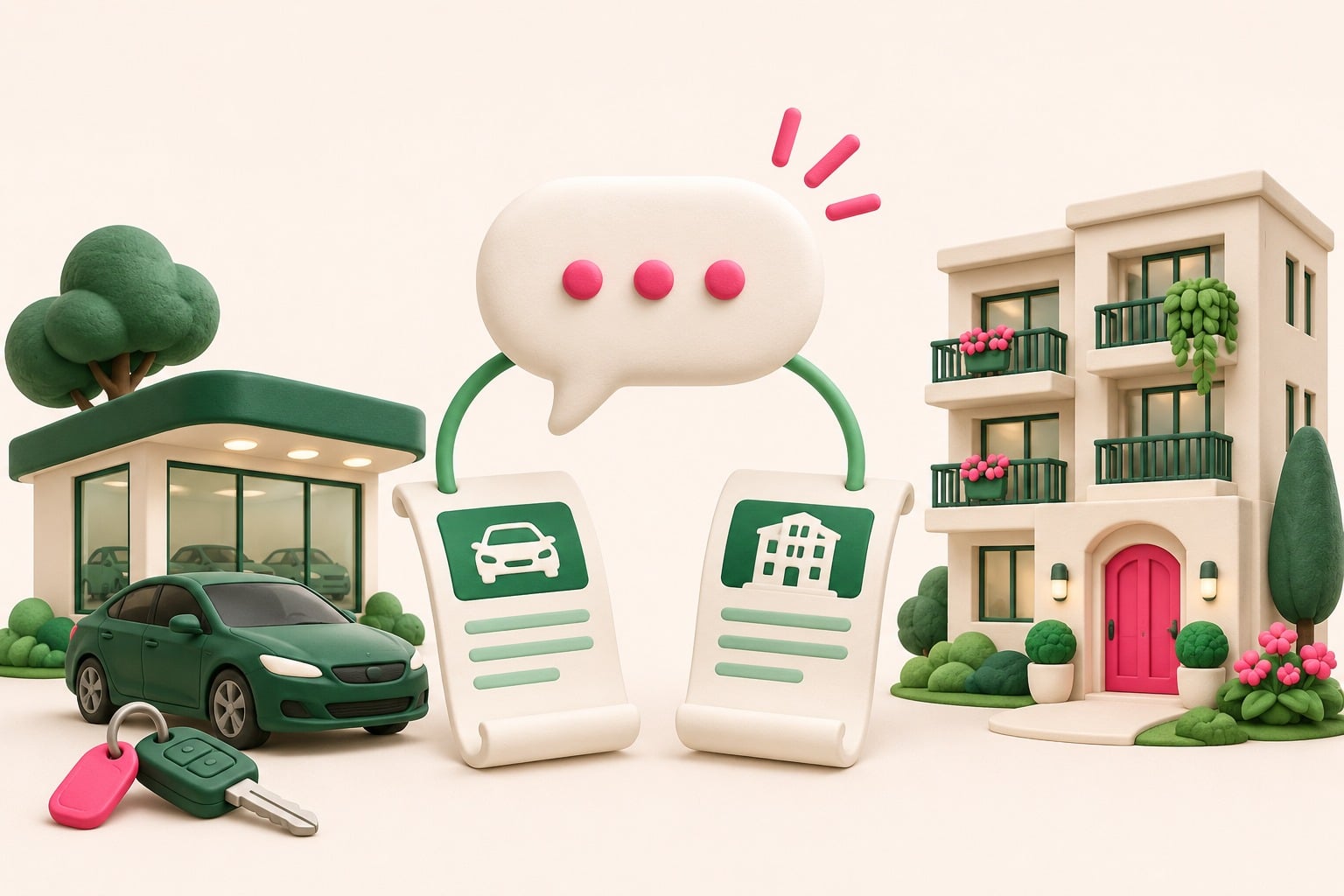
One ChatGPT advertising test bought clicks for $3.41. Another paid $10.90. The more expensive click came with much cheaper exposure. That sounds backward until you follow the money from the ad to the website.
For a real estate agent considering a new advertising channel, this is the useful question: what does a small test actually buy? Let’s look at two tests—one for a car dealership, one for apartments—and separate being seen, getting a click, and getting a useful response.
These are dated advertising tests, not a promised price list. The study notes below identify the original reports and their measurement limits.
The short version
- The apartment test spent $351 for 103 clicks in its first 30 days.
- The dealership spent $3,378 for 310 clicks in September.
- The dealership bought substantially more exposure, while the apartment ad attracted a higher share of clicks.
- Neither a click nor a reported conversion tells us, by itself, how many leases or cars were sold.
Two tests. Two very different receipts.
The apartment community was in Sarasota–Bradenton, Florida. The dealership was in Henderson, Nevada, serving the Las Vegas market. Here are the comparable delivery measures for each selected period.1, 2
| Measure | Apartments First 30 days, June–July |
Dealership September 1–30 |
|---|---|---|
| Spend | $351 | $3,378 |
| Impressions | 3,531 | 103,222 |
| Clicks | 103 | 310 |
| Cost per click | $3.41 | $10.90 |
| Click-through rate | 2.92% | 0.30% |
| Cost per 1,000 impressions | $99.52 reported* | $32.73 |
*The apartment report lists $99.52 CPM; its rounded $351 spend and 3,531 impressions calculate to $99.41. We preserve the published figure. Impressions count displays, including possible repeat displays to the same person.


Why the $11 click came with cheaper exposure
Think of the ad as a shop window. Paying less to put the window in front of people does not guarantee that many will walk through the door.
For every 1,000 impressions, the apartment test generated roughly 29 clicks. The dealership generated about three. That difference explains how an ad with more expensive impressions could still produce much cheaper clicks.
The arithmetic is straightforward: cost per click equals spend divided by clicks. Cost per thousand impressions measures a different purchase. You can also connect the two: CPM divided by the number of clicks per 1,000 impressions gives CPC. A high click-through rate spreads the exposure cost across more visits.
It does not tell us why the ads performed differently. Different offers, audiences, dates, creative, bids and businesses all matter. These were separate campaigns, not a controlled contest between apartments and cars.
What happened after people clicked?
The apartment test recorded 19 engaged visits and four floorplan views. Its engaged-visit measure covered selected on-site actions; it was not a lease count. The dealership reported 12 conversions for September, about $282 each, without a sold-car count in the table.1, 2
The next action needs its own label
103 clicks
19 engaged visits · 4 floorplan views
Actions may overlap. · Neither measure is a lease.
310 clicks
12 reported conversions
Conversion action unspecified. · No sold-car count in the table.
A brokerage should decide what it needs next: an inquiry, an appointment, a signed agreement. Those are different levels of commitment. A campaign can deliver inexpensive clicks while making very little progress toward the one that pays the bills.
That also leaves room for a fairer reading of the expensive click. A $10.90 visitor could be a better purchase than a $3.41 visitor if a larger share become worthwhile conversations. We cannot settle that question from these two reports because their outcome definitions differ.
A budget is permission to spend, not proof of demand
The apartment campaign began with a $25 daily budget but spent only $351 in the first month. Its report describes limited matching opportunities.1 That is a practical lesson for agents: entering a budget does not create an audience or guarantee delivery.
Our approach to a test would be to agree on one clear offer, a spending limit and the action we will measure. Then examine what actually runs. If impressions stay low, check the approved campaign, bidding and relevance before assuming that raising the budget will fix it. If clicks arrive but inquiries do not, inspect the promise and the destination page.
The landing page should answer the question the ad raised. A general homepage that asks the visitor to start over creates another decision before they can contact you.
How much should an agent take from these tests?
Enough to design a better experiment. Not enough to declare a universal ChatGPT advertising rate.
The apartment campaign is a historical example, not a template for advertising an individual home today. Current OpenAI policy prohibits individual housing rental or sale ads; permitted listing-platform advertising must avoid specific listings in both the creative and landing page.3 Review the actual offer before building the campaign.
For our members, the next useful step is to connect ad spend to an action they can verify. The companion article, What $500 Can Tell You About ChatGPT Ads, includes more tests and a calculator to make that tradeoff visible.
The cheap click wins only when it does something worth buying. Start with a test small enough to learn from, and a report specific enough to tell you what to change.
Study notes and sources
- RentVision: We’re Testing ChatGPT Ads for Apartments. Here’s the Running Data. Published July 29; updated October 27, 2026. First 30-day results for one Class A community in Sarasota–Bradenton, June–July 2026. Publisher-reported account and website metrics; no independent account audit. Engaged visits and floorplan views are separate measures and may overlap.
- Click Here Digital: What Ten Weeks of ChatGPT Ads Taught Us About Selling Cars. October 30, 2026. Findlay Honda Henderson; September row selected for a full calendar month. Source identifies ClickIQ and the store’s ChatGPT Performance report. Conversion action is not specified in the table; conversions are not confirmed sales. The article does not establish that every impression occurred inside the local market.
- OpenAI Ad Policies, Housing and Jobs. Updated November 20, checked November 23, 2026. Historical delivery does not establish current campaign eligibility.
Evidence reviewed November 23, 2026. This comparison uses published test results, not Virtual Results campaign-account data. Costs shown are media spend; management, setup and production costs are additional where applicable.