From disclosure to informed questions
A real estate evidence map for California buyers, sellers, agents and brokers.
Original diagram · October 8, 2026
The disclosure evidence map
On a small screen, swipe horizontally to read the full diagram. Keyboard users can focus the diagram and use arrow keys.
Why this visualization works
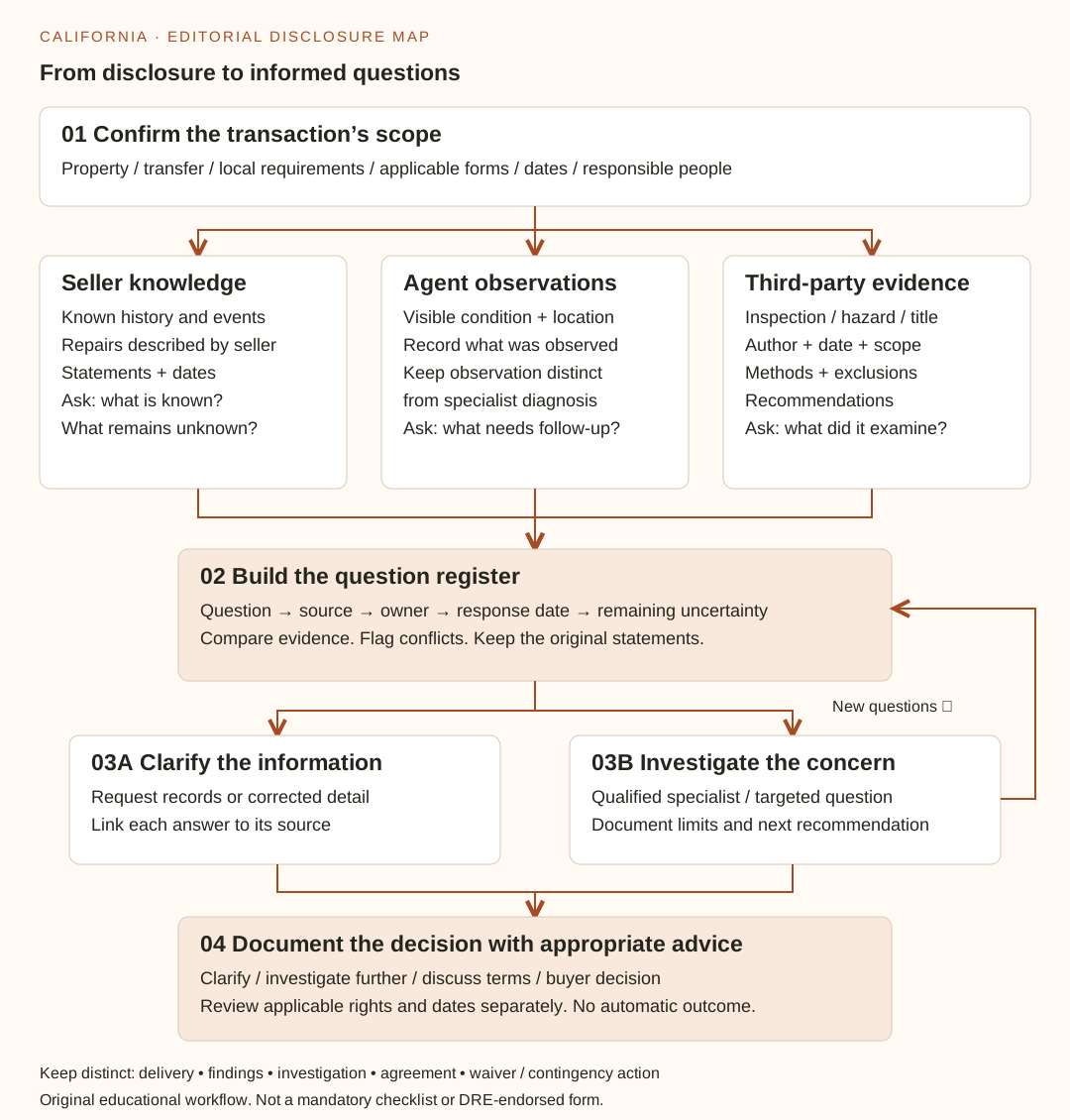
Evidence-stream workflow with a follow-up loop. A disclosure conversation brings together seller knowledge, agent observations and third-party reports. Parallel streams keep their origins visible before they meet in a shared question register. The follow-up loop shows how one answer can raise a new question.
What it leaves out: The arrows describe how to organize a conversation; they do not establish a universal delivery schedule or show every applicable form. This is not a swimlane of contractual duties.
Open it together: Use it to turn a stack of documents into an organized discussion: what do we know, where did it come from, who can answer the open question, and what comes next?
This original visual draws on the official consumer resources below. Explore their guidance for the fuller explanation.
California Department of Real Estate (DRE) — disclosure booklet, RE 6 (historical 2005 edition) · California DRE — 2026 Real Estate Law excerpts
Read the house through three different lenses
A disclosure packet becomes useful when a buyer can trace a statement back to its source. This map keeps three streams separate: what the seller knows, what the agent observes, and what a report investigates. The streams meet at questions, not at a reassuring green check. Use the diagram to run a conversation around one property, identify unanswered questions, and assign the next action. It is an original editorial teaching tool for California residential transactions, not a required form or a legal compliance checklist.
Start with the transaction, not a stack of forms
Before using the map, write the property address, transaction type, intended use, decision dates, and responsible contact on a working copy. Ask the brokerage which disclosures apply to this particular transfer. California disclosure rules have defined scopes and exemptions; a form used in one sale should not become a universal list for another. The DRE’s 2005 disclosure booklet supplied the starting reference. The DRE’s 2026 law compilation corroborates the principal distinction: the transfer disclosure statement is neither a warranty nor a replacement for an inspection. Confirm current requirements and any later changes with qualified local guidance.
Keep the evidence streams visible
In the seller lane, record an actual statement and its date: “We repaired the rear bedroom leak in 2022” is more useful to the conversation than “roof okay.” In the observation lane, record the location and what was seen: “staining at the rear bedroom ceiling.” In the report lane, record the author, inspection date, inspected area, method, exclusions, and recommendation. These are suggested editorial recordkeeping practices, not a prescribed statutory format. A roof opinion, a natural-hazard map, and a preliminary title report answer different questions. Do not flatten them into one score.
A worked example: the stain that starts a conversation
Imagine a buyer notices a faint ceiling stain. The seller describes an earlier repair; the agent records the visible stain; the home inspector recommends a roofer’s evaluation. Put all three statements beside each other. Ask whether the repair invoice exists, whether the present condition was evaluated, and which areas were inaccessible. Assign the roof question to an appropriate specialist and put the promised response date beside it. An invoice can document work without establishing the current condition. A specialist’s opinion can narrow uncertainty without guaranteeing every concealed surface. This fictional example is a model for questions, not a diagnosis of a house.
Natural hazards belong in their own lane
Use a hazard report to start a location-specific inquiry rather than to declare a property safe or unsafe. The DRE guide distinguishes mapped hazard information from predictions of an individual disaster. Ask which map and date the report uses, what the provider’s scope covers, and what further questions the buyer wants answered. In a teaching example, a mapped designation could prompt separate questions about intended use, insurance options, or a specialist’s assessment. Keep those answers attached to their own sources. A map result should not be relabeled as an insurance quote, a structural inspection, or permission to build.
Move from a question to a documented decision
The right side of the diagram is a deliberately explicit decision record. For each concern, write the question, who will answer, when an answer is needed, and what is still unknown. Then distinguish clarification, further investigation, negotiation, and the buyer’s decision with appropriate professional advice. The branches show possible conversations; they are not automatic remedies or promises that the contract permits an action. Contractual rights and dates need their own review. Record a disclosure’s delivery separately from a completed inspection, an agreed repair, or any signed waiver or contingency action. “Received” is a document event; it is not a universal approval of condition.
Use it in a listing presentation or buyer meeting
A listing agent can show sellers why a clear description of known history helps everyone ask better questions. A buyer’s agent can use the same picture to explain why a packet and an investigation are different activities. A broker can use an anonymized example for staff training: give each person one lane, then ask the group where the evidence disagrees. Keep the teaching exercise focused on traceability. Remove personal names and transaction details from any public adaptation. For a short social post, crop one lane and ask a concrete question—“What would you ask about a past roof repair?”—then link to the complete diagram so its limits remain visible.
Adapt this resource for your own practice
Download the SVG and change the colors, heading, and example in a vector editor, presentation app, or with a designer. Preserve readable text and the separation of the three evidence streams. Replace the California scope note only after local review of the new jurisdiction. Have the brokerage review applicable forms, delivery rules, specialist referrals, contract language, and decision dates before using a transaction-specific version. Keep an adaptation date and identify the changes. You may reuse and adapt our original diagram and prose with attribution; this permission does not grant rights to government seals, third-party forms, or the source publications. Do not imply DRE endorsement.
Sources — official guidance and credits
California DRE, Disclosures in Real Property Transactions, sixth edition (2005): printed pp. 1–7, 10–14 and 27 explain the disclosure context. This edition is historical.
California DRE, 2026 Real Estate Law: Pertinent Excerpts from the California Codes: Civil Code §§1102–1102.6 (scope, exemptions and form); §§1103–1103.2 (hazard disclosure); §2079 (visual inspection). Consult current official text and local advice for transaction use. Sources reviewed October 8, 2026. No DRE endorsement is implied.
✦ Open it together. Make the conversation better.
Try this with a client: open the diagram during your next conversation. Start with “Where are we now?” Then ask “Which question would you like us to work through?” Let the visual guide the discussion, and keep the client’s own priorities at the center.
Pro tip: bookmark this page so you can return to it in a consultation, showing or team meeting. Give us some love: if you share or adapt it, please link back to Virtual Results Real Estate Publishing.
Make it yours with ChatGPT or Claude — including PowerPoint
Copy the prompt below and paste it into your assistant with this page’s diagram.
Create an original real estate visual based on the idea on this page. First walk me through my choices: client audience, local context, colors, shapes, level of detail, and the questions I want to explain live. Preserve the important distinctions in the explanation. Then remake the visual from scratch in my chosen style, with a clear title, readable labels and the credit “Virtual Results Real Estate Publishing” linked to this page. Give me an editable diagram and a simple browser demo with pause and restart controls if motion adds value. Also create a PowerPoint version if your tools allow it; otherwise give me exact slide-by-slide instructions, including layout, speaker notes and a source slide. Use one overview slide, then one close-up slide for each decision or stage. Suggest two questions to ask clients while we review it together.