
What Is an MCP Server? A Plain-English Guide for Realtors
An MCP server lets an AI assistant do things on your real estate website instead of just talking about it. What that means for agents and brokerages.
An MCP server lets an AI assistant do things on your real estate website instead of just talking about it. What that means for agents and brokerages.
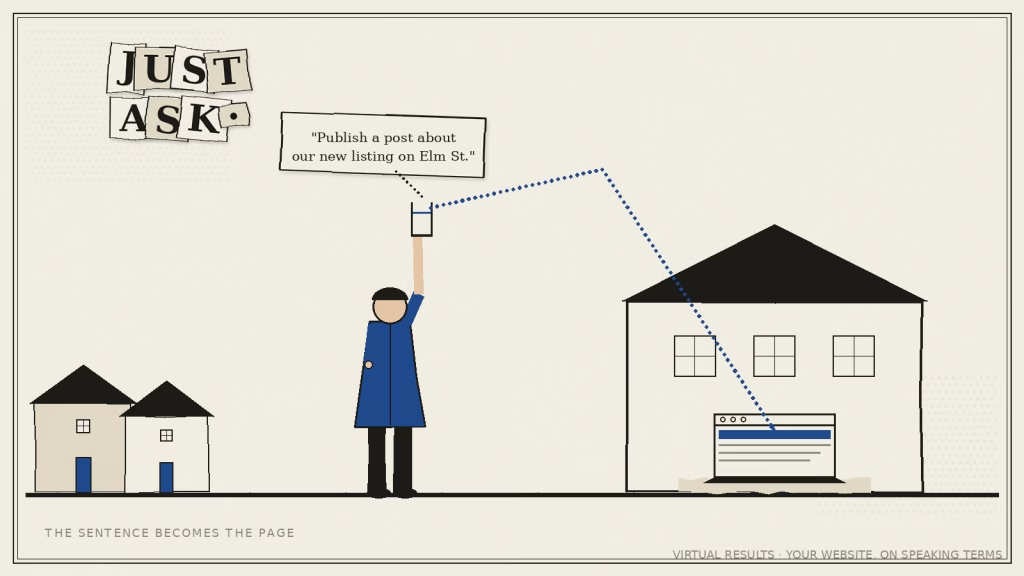
An AI connection that lets real estate agents and brokerages run their own website by asking: post a blog, update a listing, edit a page.
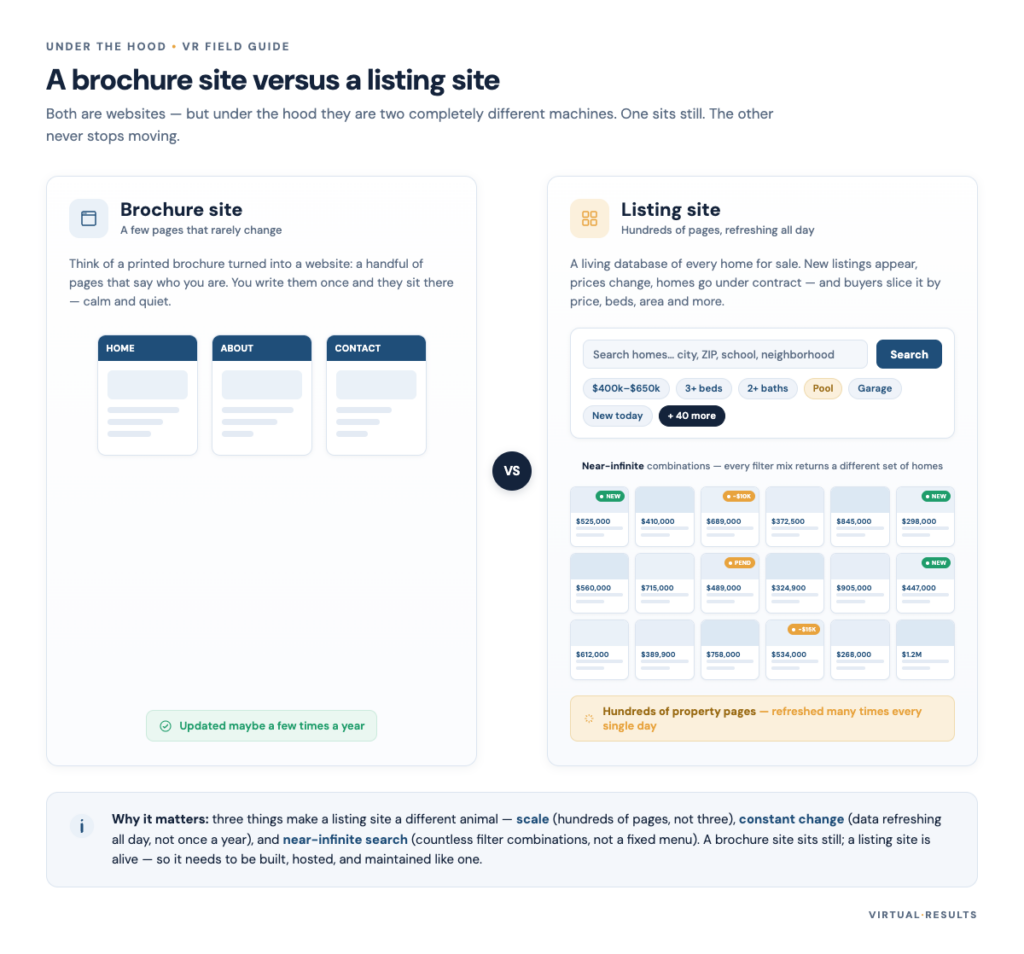
A listing site is not a brochure site. Why real estate agent and brokerage websites break ordinary hosting, and the isolation and cache that absorb spikes.
What a premium AI-enhanced real estate article looks like: editorial type, agent-branded, with live listings in the content. Design notes and evidence.
Before a buyer or seller reads your bio, an AI has formed a first impression. Our prototype of an AI-ready real estate agent profile, and why it matters.
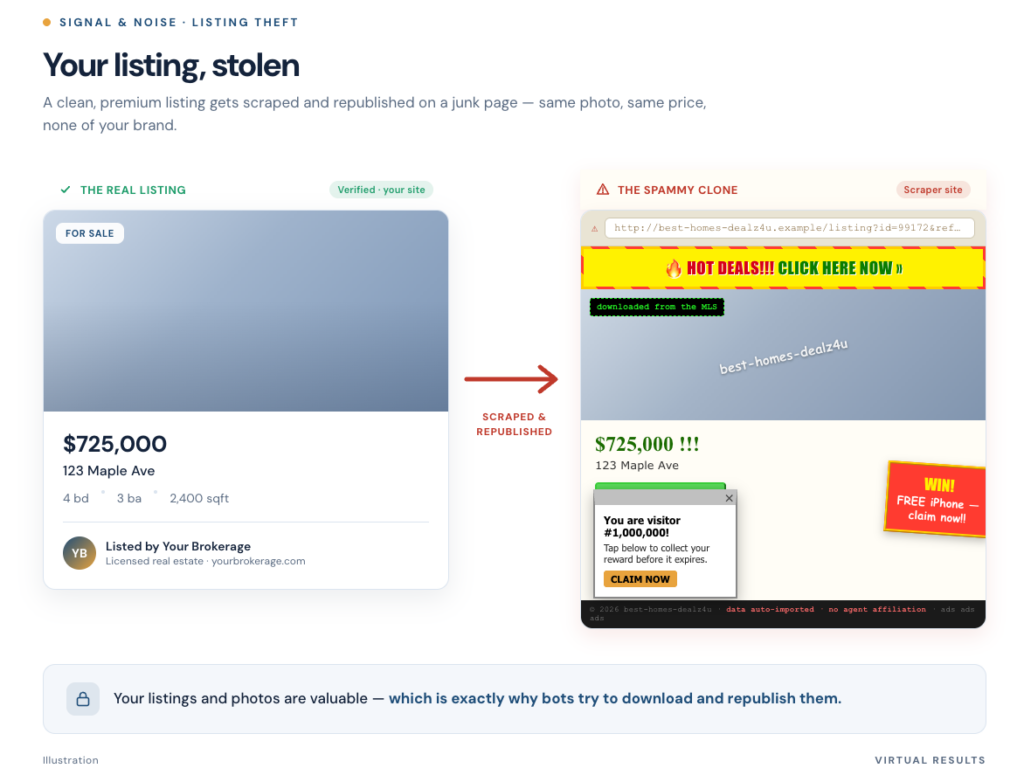
About half of web traffic is automated, and some bots copy your MLS listings. How we sort bots on real estate websites, the IDX rules, what agents can do.
When a real estate agent publishes a market report, the post can build its own Instagram card, Reel storyboard and X thread. What that takes.
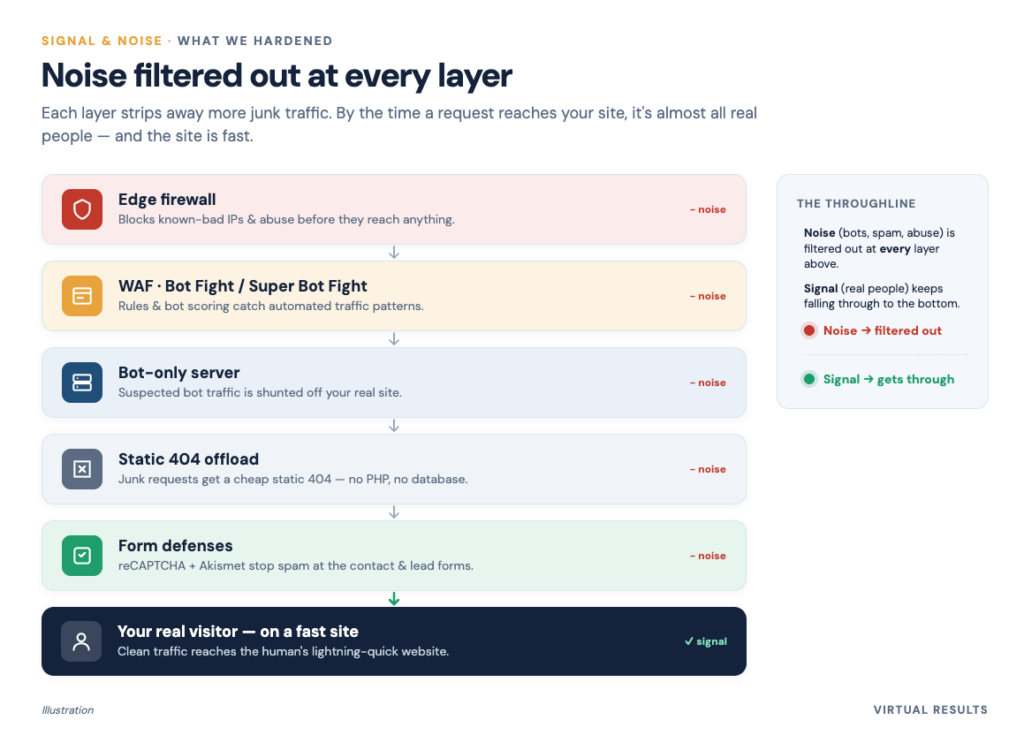
A free real estate website security hardening checklist agents and brokerages can copy and hand to any webmaster. Part 7 of Signal & Noise.
A Homes Near Me call to action that turns any listing page into a local lead magnet, so real estate agents own their leads instead of buying them.
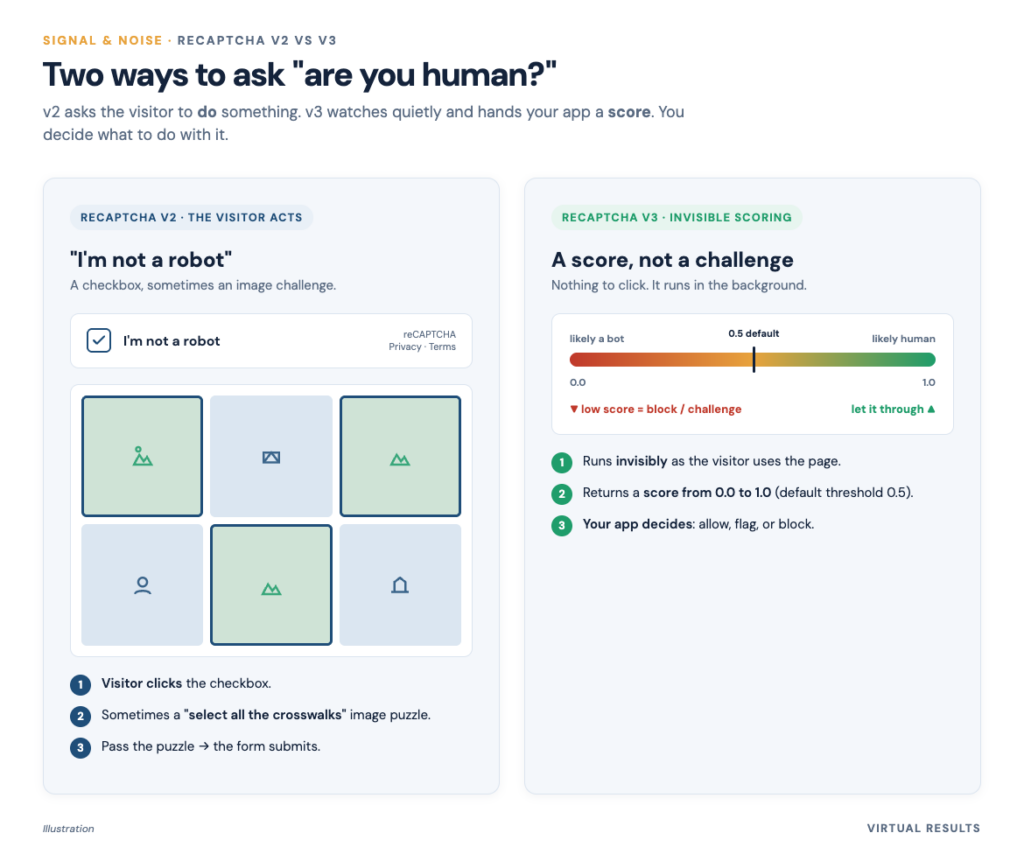
reCAPTCHA, Akismet, CAPTCHA solvers and the AI bots real estate websites can’t simply block without hurting SEO. Part 6 of Signal & Noise.
Native real estate advertising for brokerage and agent websites: content-matched ads with office and division CTAs, and the line we won’t cross.
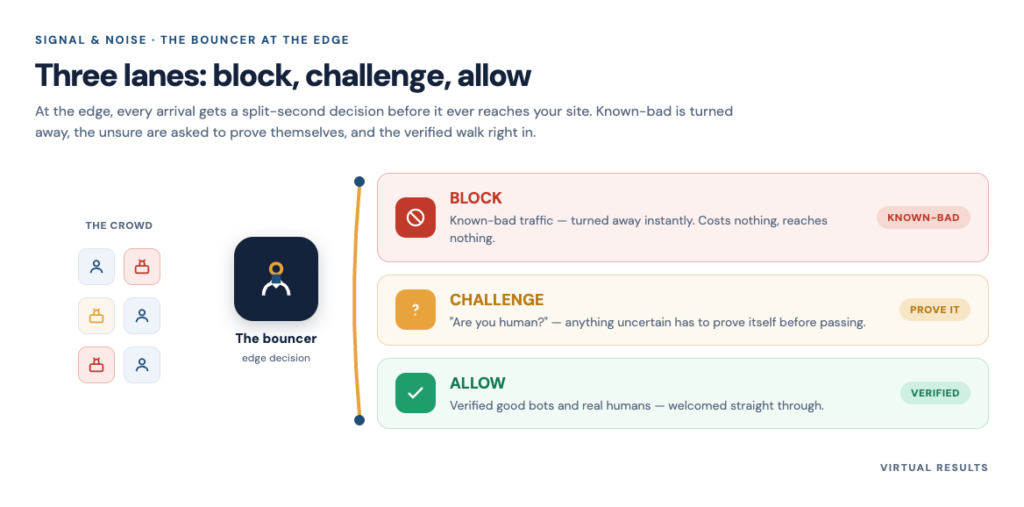
What a web application firewall does for a real estate agent website, how bot protection sorts the crowd, and the honest cost of a false positive.
A Substack-style soft gate for real estate agent websites: premium market insights behind a one-field unlock, and whether it earns more leads.
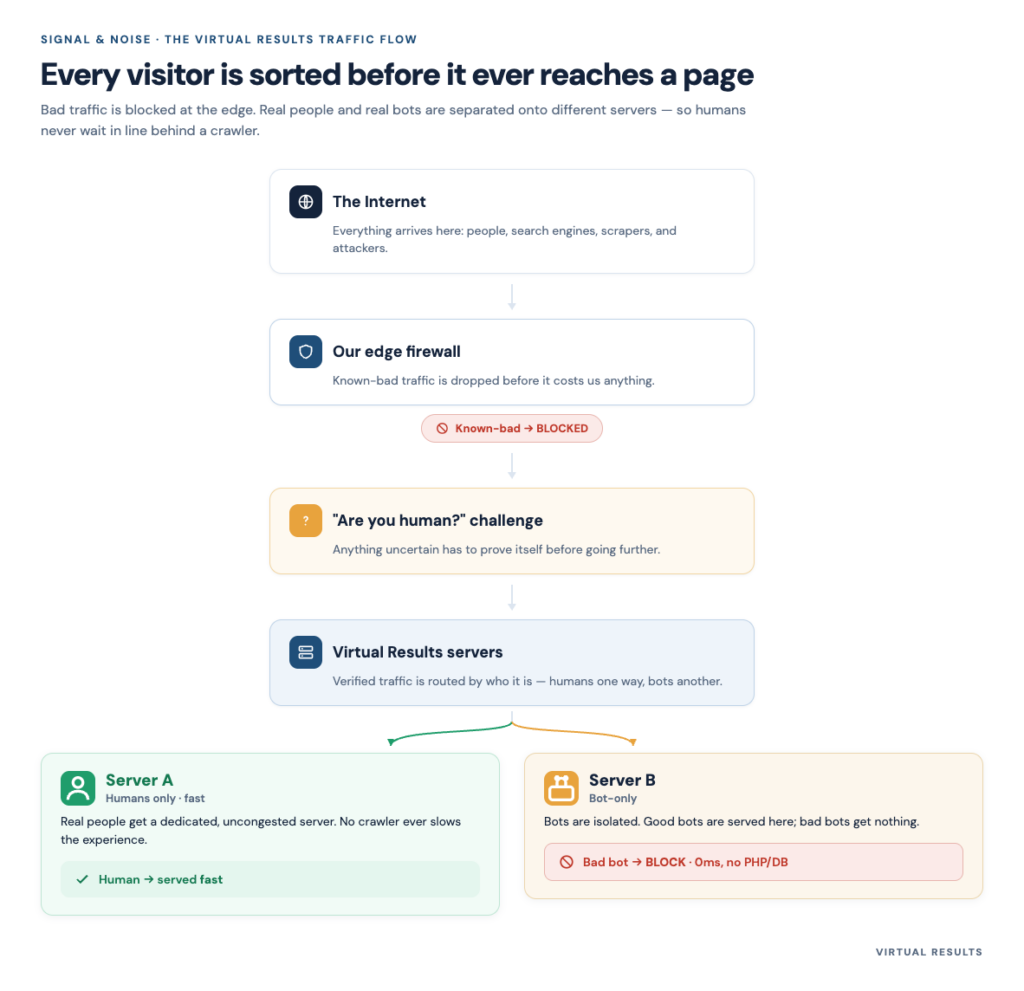
Our answer to bot traffic on real estate agent websites: a second copy just for the robots. Same content, different server, not cloaking.
A buyer, a seller and an investor want different things from one market report. How agents can let readers choose their view, and where it gets hard.
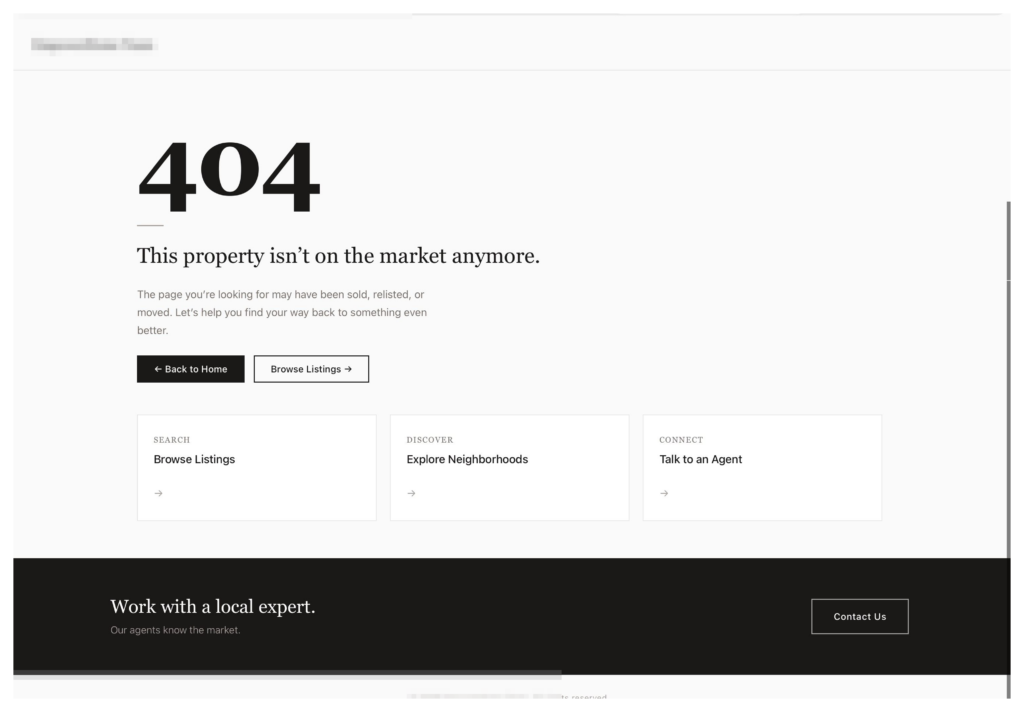
Homes sell and their listing pages disappear, and Google says that’s fine. Why the 404 is a real estate website’s busiest page, and how we serve it.
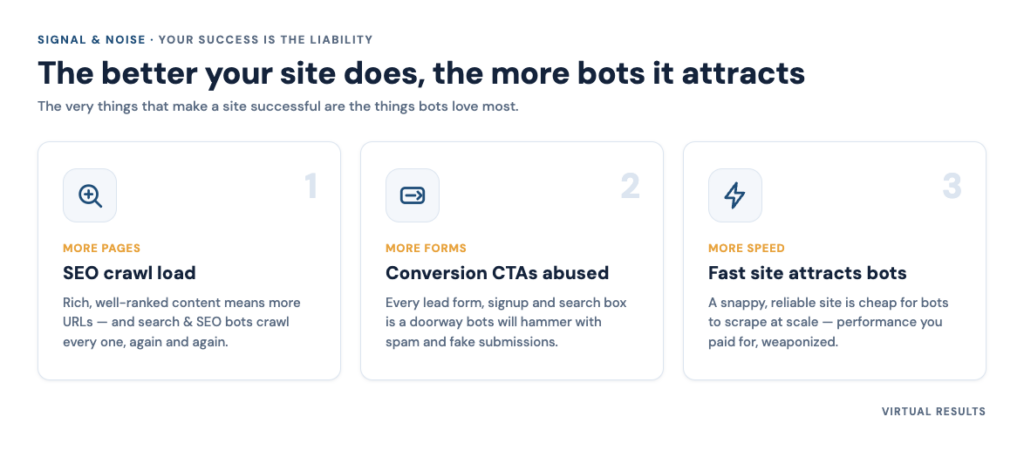
Why bot traffic costs real estate agent and brokerage websites real money, and how a site’s own success invites the swarm. Part 2 of Signal & Noise.
One contextual question, one tap, no form. How real estate agent websites can learn what buyers and sellers want without pop-ups or over-asking.
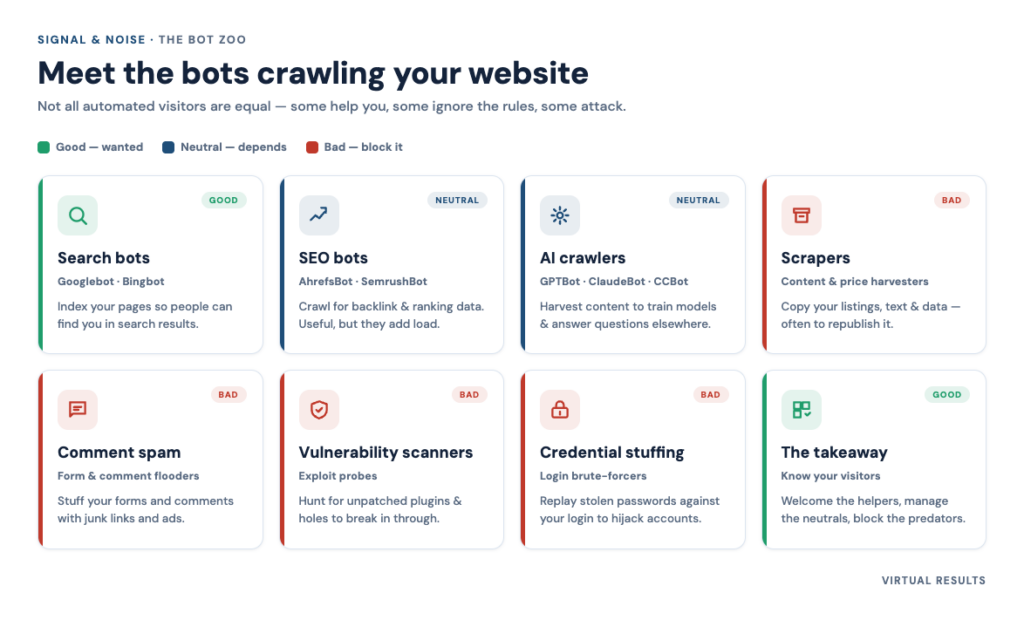
A growing share of visitors to real estate agent websites aren’t people. A field guide for agents to good bots, bad bots and the new AI crawlers.
Instead of hiding what AI learns about readers, show it. A matchmaker sidebar that turns buyers and sellers on an agent’s website into active leads.
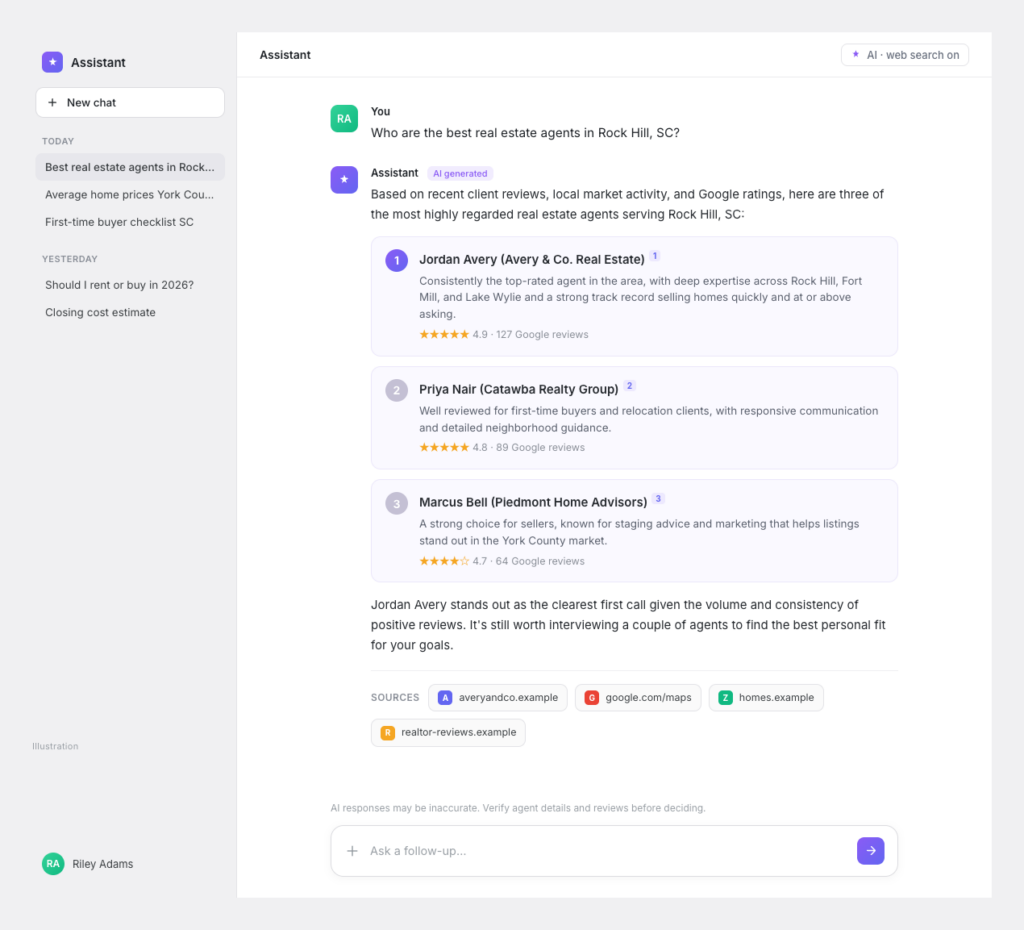
Generative engine optimization for realtors and brokerages: how to get cited by ChatGPT, Gemini and Google AI when buyers and sellers ask for an agent.
What if every real estate article came with a two-host AI audio overview? Our NotebookLM-style prototype for agents, and what we learned.
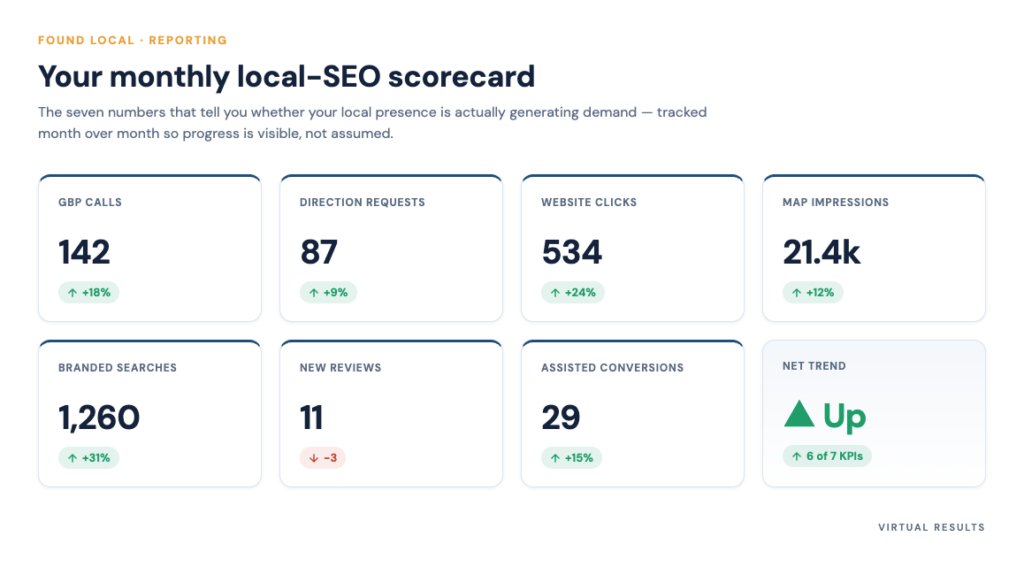
How realtors and real estate teams know local SEO is working: the metrics that predict listings, a map-pack gap check, few tools and a monthly report.
Four reading features for a real estate blog: progress bar, key takeaways, article chat and recommended next reads for buyers and sellers.